The Marriage Between Hazel Green and Byron Gogol
Made for LoveThe Marriage Between Hazel Green and Byron Gogol develops from an encounter colored by curiosity into a union whose apparent intimacy is compromised by unequal power and constant technological observation. Hazel initially understands Byron’s attention as fascination and his success as a way out of her unsettled circumstances. In retrospect, she recognizes that her accommodation helped conceal the limits of their connection: the woman Byron chose was, in important ways, the agreeable persona she performed for him.
Encounter and Courtship
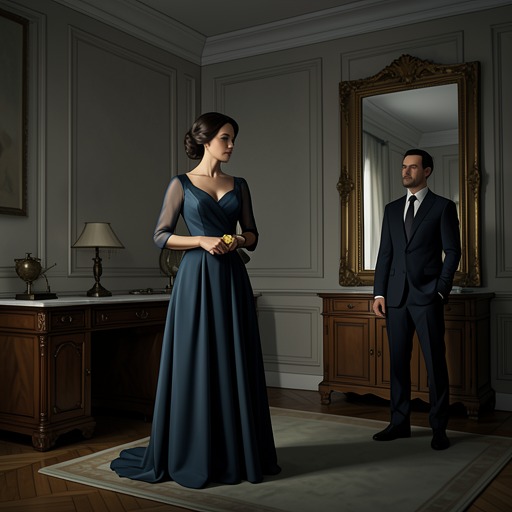
Their relationship begins in May 2008, when Byron comes to Hazel’s college graduation to deliver what he calls a digital commencement speech. The meeting is accidental: a friend had been assigned to interview him for the campus newspaper, and Hazel becomes involved in the resulting predicament. When scanners identify her as Hazel Green rather than the person she has presented herself as, Byron nevertheless agrees to see her. He later explains that he found her confusing in a fascinating way. He noticed that she was wearing someone else’s clothes but could not tell who she was or what she wanted.
The interview soon reverses direction. Although Hazel is supposed to be asking Byron questions, he keeps asking questions about her. His attention gives her an unfamiliar sense of distinction: she has not felt that she delighted her parents or herself, but Byron’s way of addressing her makes her name seem newly precise and important. At the same time, this early fascination is not yet evidence of mutual understanding. Byron is intrigued by the very ambiguity Hazel cannot explain, while Hazel is drawn to being regarded as remarkable.
Six months later, Byron proposes a carefully bounded beginning rather than an immediate legal commitment. He says his schedule and lifestyle make traditional dating difficult, proposes an initial six-month relationship, and asks that they date exclusively before evaluating their future. Hazel finds the idea of commitment remote from her own experience, more familiar as a word in books and advertisements than as a practical possibility. The arrangement makes intimacy sound orderly and testable, in terms that suit Byron’s preference for efficiency. Their first kiss is followed almost immediately by an escort’s denial that it happened, a disorienting incident that foreshadows how often Hazel’s experience will be subordinated to someone else’s account of events.
The Marriage and Hazel’s Performance
By the time Byron proposes, Hazel’s mother has died, and Hazel’s assumptions about marriage have already been unsettled. Her parents’ relationship has included an understanding that her mother could pursue experiences before dying; Hazel finds this difficult to reconcile with her previous picture of marriage. The proposal arrives during grief and uncertainty, making Byron’s confident offer of a different life especially powerful.
Looking back, Hazel judges the courtship and marriage suspect. She had known, at some level, that she should not accept, but Byron’s success and his interest in her made the relationship attractive. With him, she presented herself as cheerful, adaptable, and without preferences, agreeing with what he admired and disliked. She describes herself as having acted like a mood ring. This performance made them easy to get along, but it also meant Byron was relating to a Hazel who continually adjusted herself to his reactions.
Hazel later considers what Byron may have expected in return for choosing her. She believes he wanted sustained gratitude and someone he could astonish; she also recognizes that her lack of scientific and engineering knowledge may have made her especially suited to that role. These are Hazel’s retrospective interpretations, not a mutually negotiated account of their marriage. Her joking that Byron rescued her, and his reply that she rescued him too and was the first woman he had considered marrying, briefly frames the union as reciprocal. Yet the relationship’s practical terms increasingly give Byron the authority to define what safety, care, and partnership require.
The Hub and Technological Intimacy
The couple spends much of their married life at The Hub, a sprawling, clinical residence equipped with touch-sensitive and recognition technology. Byron limits trips away from it, treats travel as a risk, and returns each night with mechanical regularity. Hazel experiences the place less as an ordinary home than as a holding space, and its clean, technologically saturated rooms never become fully real to her. Her wandering through the building, looking closely at its surfaces, is among the few hobbies she has there.
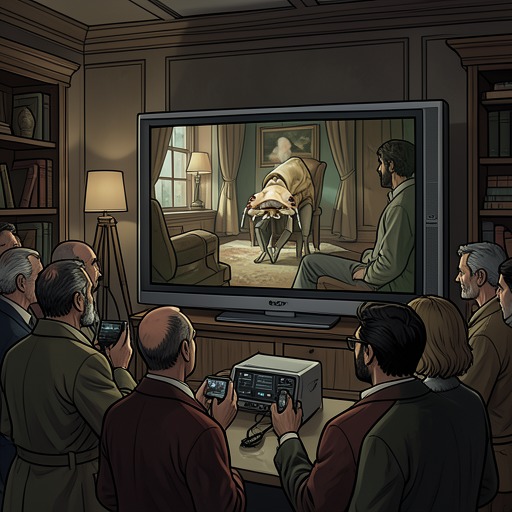
Monitoring begins to feel increasingly claustrophobic. Byron reassures Hazel that it is harmless, but he comments on her daily activities while away, and the meals brought to her change according to bodily-scan reports she had not known were being collected. The marriage’s routines thus turn intimate knowledge into a product of observation: information about Hazel’s body and behavior reaches Byron whether or not she has chosen to share it.
When Byron eventually admits the extent of the system, Hazel learns that cameras and scanners are present throughout The Hub, including the bathroom, and that none of her time there has gone unrecorded. He defends the technology as serving safety, convenience, health, and happiness, and claims that analyzing her words and actions can reveal her state of mind with nearly 97 percent accuracy. For Hazel, this promise of precise understanding exposes a deeper failure of intimacy. Data may let Byron classify her, but it does not give her control over being watched or make her feel understood on her own terms.
The engagement ring already contains this conflict in miniature. Nano-computer chips sit within its band, and a monitor is embedded in the diamond. On receiving the ring, Hazel gets an alert that her heart rate is too high and instructions to sit down and regulate her breathing. Byron urges her to follow them. Though she says she is happy, Hazel recognizes the episode as a panic attack. A token of commitment therefore also functions as a monitoring device: the marriage’s technological care is present at its symbolic beginning, alongside a bodily response Hazel cannot make fit the celebration expected of her.
Estrangement and Attempted Separation
Hazel’s resistance emerges within the relationship before she leaves. At one point, she suggests moving out; Byron calls the idea unacceptable, and Hazel understands his reaction as implying that leaving would force him into something terrible. She nevertheless goes to her father’s home, afraid that Byron may retaliate but uncertain that he will. Her departure marks a decisive break with the compliant role that had helped sustain the marriage.
Even after she has left, Byron tries to direct the terms of their contact. He has placed basic electronics in a weatherproof safe in the backyard and gives Hazel a code based on their anniversary. She refuses the devices and says she wants neither his money nor continued contact, only a separate and insignificant life. Byron responds with anger. He then asks her to retrieve a mobile device from the safe and call him on a secure line. When she asks what will happen if she refuses, a call comes in on his end; he says they will speak later, probably just after noon, and warns that he has tried to prepare her for what is coming. The anniversary code, once attached to the meaning of their union, now serves as access to equipment he wants her to use after she has attempted to end the relationship.
Meaning of the Relationship
The marriage’s central contradiction is that Byron presents control as a form of care while Hazel experiences it as the loss of privacy and choice. The six-month dating agreement, the ring’s sensors, The Hub’s continuous recording, and Byron’s later demands all connect partnership to systems of measurement and management. These arrangements make closeness appear efficient and legible, but they do not resolve the distance between Byron’s confidence that he can know Hazel and her need to determine her own life.
Hazel’s retrospective account also complicates the idea that the relationship began as simple deception or simple rescue. She was drawn to being noticed and to the material security Byron offered at a moment when grief, debt, and uncertainty made escape from her previous circumstances appealing. Yet she recognizes that her cheerful compliance obscured what she wanted, while Byron’s fascination with her did not prevent him from treating her as someone to monitor and manage. Her attempt to leave is therefore not merely the end of a romance; it is a refusal of the version of intimacy in which being chosen obliges her to remain available, observable, and grateful.